How to get forklift certified: training, cost and how long it takes
Forklift certification comes from your employer, not a government license. Here's what OSHA requires, what training costs and how long it takes.
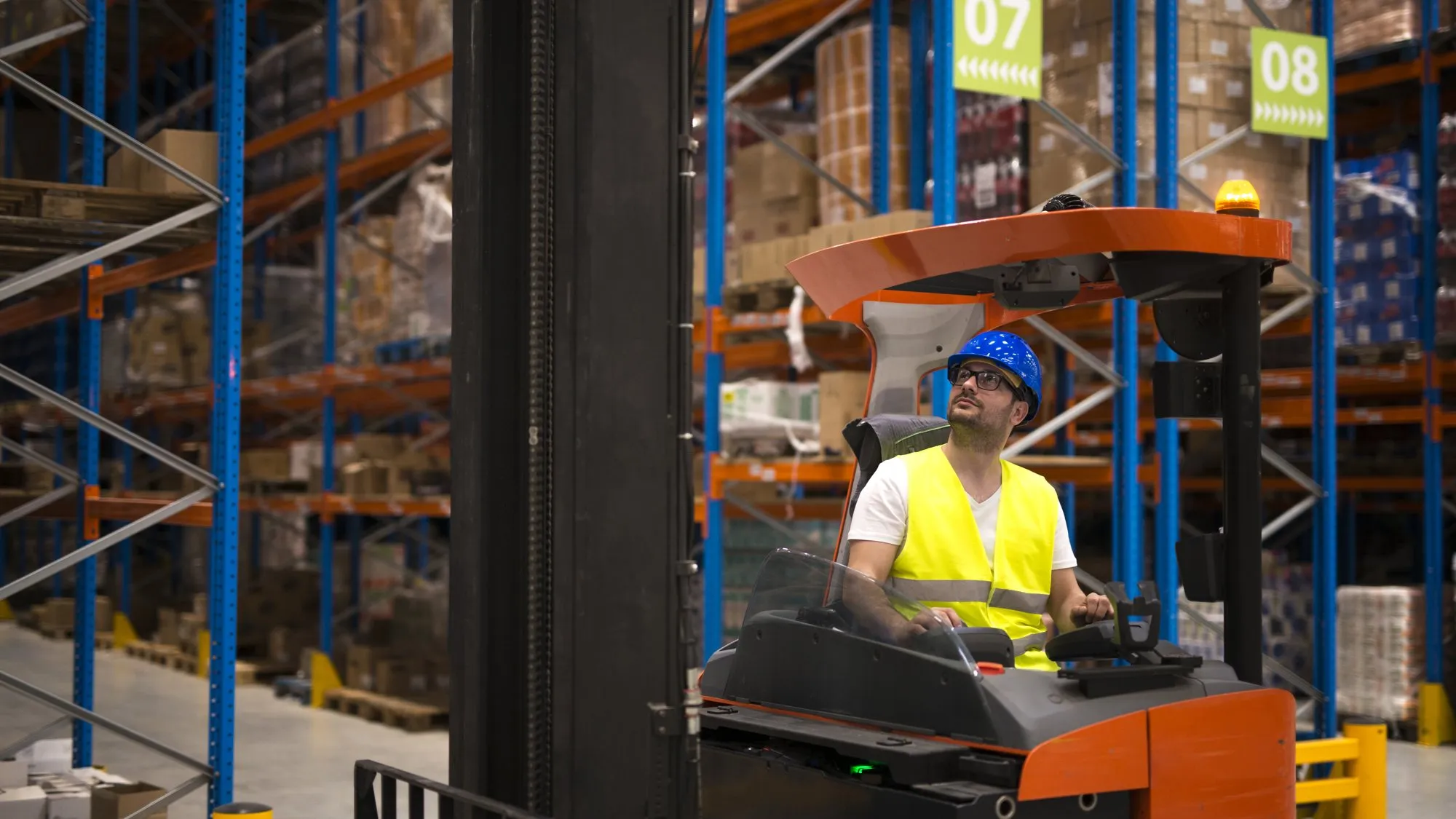
Getting forklift certified means completing three things: classroom-style instruction, hands-on practice with a trainer, and an evaluation of how you drive in the actual workplace. Your employer then signs off that you passed. There’s no government forklift license, and a certificate from an online course doesn’t let you drive a forklift on its own.
That surprises a lot of people who are trying to get into warehouse work. Here’s how the rules work, where to get training, what it costs and how long it usually takes.
Key takeaways
- Federal safety rules (OSHA’s 29 CFR 1910.178) make your employer responsible for training, evaluating and certifying you before you drive a forklift on the job.
- Training has three required parts: formal instruction, practical training and an evaluation in the workplace. The hands-on parts can’t be done online or over video.
- You must be at least 18 to operate a forklift in most non-farm jobs.
- Most material moving machine operators are trained on the job in less than a month, according to the Bureau of Labor Statistics.
- Your employer must re-evaluate you at least once every three years, and sooner after an accident, a near miss or a switch to a different type of truck.
What “forklift certified” actually means
OSHA, the federal workplace safety agency, calls forklifts “powered industrial trucks.” Its rule covers fork trucks, platform lift trucks, motorized hand trucks and similar trucks powered by electric motors or engines. Farm vehicles and earth-moving equipment are covered by different rules.
Under that rule, your employer must make sure you’re competent to operate the truck safely, shown by finishing training and an evaluation, before you drive it on your own. The only exception is driving during training itself.
Once you’ve passed, the employer certifies it in writing. OSHA requires that record to include:
- your name
- the date of your training
- the date of your evaluation
- who did the training or evaluation
So “certified” doesn’t mean you hold a card from the government. It means an employer has trained you, watched you drive and documented that you can do it safely on its trucks, in its workplace.
Who can get certified?
Age
Under federal child labor law, no one under 18 may work in jobs the Department of Labor has declared hazardous. Operating, riding on or helping to operate forklifts is on that list for non-farm work. Farm jobs follow separate rules, and your state may add its own limits.
If you’re 18 or older, there’s no federal education requirement. The Bureau of Labor Statistics says no formal credential is typically required for material moving machine operators, though some companies prefer a high school diploma.
Experience
You don’t need experience to start: the Bureau of Labor Statistics says material moving machine operators are typically trained on the job. If you’ve driven a forklift before, OSHA lets an employer skip topics you’ve already been trained in, as long as that training fits their truck and workplace and they evaluate you and find you competent.
The three parts of forklift training
1. Formal instruction
This is the classroom part. OSHA lists lectures, discussion, interactive computer learning, video and written material as acceptable formats, which is why some of this part can be done online.
The rule spells out what training has to cover, unless a topic doesn’t apply to your workplace. Truck topics include:
- controls and instruments, and how they work
- how a forklift differs from a car
- steering, maneuvering and visibility, including when a load blocks your view
- forks and attachments, vehicle capacity and stability
- inspections and maintenance you’ll be expected to do
- refueling or charging batteries
Workplace topics include floor surfaces, load stability and stacking, pedestrian traffic, narrow aisles, ramps and slopes, and areas where poor ventilation could let carbon monoxide or diesel exhaust build up.
2. Practical training
Next you drive. A trainer demonstrates, then you practice: starting, stopping, steering, lifting, stacking and unstacking loads. While you’re a trainee, OSHA only allows you to drive under the direct supervision of someone qualified to train operators, and only where it won’t put you or coworkers in danger.
3. Evaluation in the workplace
Finally, a qualified person watches you operate the truck in the real workplace and judges whether you can do the job safely. In a 2025 letter, OSHA said that direct supervision means the evaluator must be physically present where the practical training and evaluation happen. A live video stream on a phone or laptop doesn’t count.
Can you get forklift certified online?
Only partly. You can do the formal instruction online, and an online course can teach you the safety rules and prepare you for a written test. But the practical training and the workplace evaluation have to happen in person, on the kind of truck you’ll use.
That’s why you should be careful with websites that promise an “OSHA forklift license” in an hour. A printed card from an online course may show you studied the rules, but it doesn’t meet the training requirement by itself, and an employer still has to train and evaluate you before you drive.
How much does forklift certification cost?
It depends on who arranges the training:
- Through an employer: because the employer has to train, evaluate and certify you anyway, training is often part of the job. Ask about it in interviews before you pay for anything.
- Through an outside course: community colleges, equipment dealers and safety training companies run forklift classes. Fees vary by provider, by location and by whether hands-on practice is included. Before you enroll, ask whether the price includes driving time on a real truck and what kind of trucks you’ll train on.
- Online-only courses: usually the cheapest option, but they cover only the classroom part.
If you’ve been laid off, have a low income or face other barriers to work, you may qualify for training funds under the Workforce Innovation and Opportunity Act (WIOA). The Department of Labor’s CareerOneStop says to ask your local American Job Center whether you qualify.
How long does it take?
OSHA doesn’t set a minimum number of hours. Training takes as long as it takes you to learn the material and pass the evaluation, which depends on your experience and the type of truck.
As a guide, the Bureau of Labor Statistics says material moving machine operators are typically trained on the job in less than a month, and that training time varies with the type of machine. Expect extra training if you move to a different kind of truck, since OSHA treats that as a reason for refresher training.
When you need refresher training
Certification doesn’t last forever. Your employer must evaluate your driving at least once every three years.
OSHA also requires refresher training, followed by an evaluation, when:
- you’re seen operating the truck unsafely
- you’re involved in an accident or a near miss
- an evaluation shows you aren’t operating the truck safely
- you’re assigned to a different type of truck
- something changes in the workplace that could affect safe operation, such as a new layout or floor surface
Does certification transfer to a new job?
Not automatically. Certification covers the trucks and conditions you were trained and evaluated on, so a new employer has to evaluate you for its own trucks and workplace. If your earlier training fits their setup, they can skip repeating those topics once they’ve evaluated you.
Keep copies of any training records or certificates. They show a new employer what you’ve already learned and can shorten your training. When you list forklift experience on a resume, include the types of trucks you’ve driven, such as sit-down counterbalance, reach truck or order picker, and roughly how long you drove them.
What forklift skills can mean for your pay
Driving a forklift can open up roles beyond general warehouse labor. According to the Bureau of Labor Statistics, the median annual wage for industrial truck and tractor operators, the group that includes forklift drivers, was $46,420 in May 2025. That works out to roughly $22 an hour for full-time, year-round work. Pay varies by state, employer and shift.
If you’re looking now, filter job listings for ones that mention forklift work or on-the-job training.
Next steps
- If you’re 18 or older, look for warehouse jobs that say they train forklift operators.
- If you want a head start, take a course that includes hands-on practice, not just an online class.
- Keep every training record you get.
- Expect your new employer to evaluate you on its own trucks before you drive on your own.
Frequently asked questions
Can you get forklift certified without an employer?
You can take a course on your own, and it can teach you the rules and give you hands-on practice. But under OSHA’s rule, the certification that lets you drive on the job comes from an employer after it evaluates you in its workplace.
Is an online forklift certificate valid?
An online course can cover the classroom part of training. It can’t replace the practical training and in-person workplace evaluation that OSHA requires, so an online certificate alone doesn’t qualify you to drive a forklift at work.
Do you need a driver’s license to drive a forklift?
OSHA’s forklift rule doesn’t require one. Some employers ask for a driver’s license anyway, so check the job listing.
How often do you need to renew forklift certification?
Your employer must evaluate you at least once every three years. You’ll need refresher training sooner if you have an accident or near miss, are seen driving unsafely, switch to a different type of truck or the workplace changes in a way that affects safety.
How old do you have to be to drive a forklift?
You must be at least 18 for most non-farm jobs under federal child labor rules. Farm work follows different rules, and some states add their own limits.