How to become a bartender: age rules, server training and getting hired
You don't need a degree to tend bar. Here's how state age rules and alcohol server training work, what bartenders earn and how people get their first bar job.
Becoming a bartender doesn’t take a degree or a license from a school. You need to meet your state’s minimum age for serving alcohol, complete any alcohol server training your state or employer requires, and get hired somewhere that will train you on the job. Many bartenders start as barbacks or servers and move behind the bar once they know how the place runs.
Here’s how the age rules and server training work, what the job pays, and the usual ways people get their first bartending shift.
Key takeaways
- Bartenders usually need no formal education and learn through on-the-job training that lasts a few weeks, according to the Bureau of Labor Statistics (BLS).
- Most states require bartenders to be at least 18, but some require 21, and some let 18- to 20-year-olds serve but not mix drinks. Check your state’s rule.
- Some states require alcohol server training. California requires Responsible Beverage Service (RBS) certification within 60 days of hire; in Texas, TABC certification is voluntary by law but many employers require it.
- The median wage for bartenders was $16.51 an hour in May 2025, including tips (BLS).
- Under federal law, employers can pay tipped workers a cash wage as low as $2.13 an hour, as long as tips bring them up to at least $7.25. Many states require more.
What bartenders do
Bartenders mix and serve drinks, either straight to customers at the bar or through servers. The BLS lists the core duties as checking IDs, taking orders, mixing drinks to recipe, collecting payment, and keeping the bar stocked and clean. Many also serve food, prep garnishes and track inventory of liquor and mixers.
The job is physical and social. You’re on your feet for the whole shift, lifting cases and ice, and talking with customers who may have had too much to drink. Schedules lean toward late evenings, weekends and holidays, and part-time work is common.
How old do you have to be to bartend?
There’s no single national rule. Every state sets its own minimum age for people who serve or pour alcohol, and the rules are often different for servers (who carry drinks to tables) and bartenders (who pour and mix them).
According to the BLS, most states require bartenders to be at least 18. The National Institute on Alcohol Abuse and Alcoholism’s Alcohol Policy Information System (APIS), which tracks state alcohol laws, notes that:
- Some states set the minimum at 21 for servers, bartenders or both.
- Some allow under-21 workers to serve only certain drinks (such as beer and wine) or only in certain places (such as restaurants).
- Some require a manager who is 21 or older to be on site when an under-21 employee is serving or pouring.
- Some allow underage servers but not underage bartenders. None allow underage bartenders while banning underage servers.
A few states allow younger workers under specific conditions. Michigan, for example, has allowed 17-year-olds to serve alcohol since June 2022 if they’ve completed state-required server training.
Your state’s alcohol control agency (often called the ABC, liquor control board or liquor authority) publishes the rule. Employers can also set a higher age than the law requires, so a bar may hire only workers who are 21 even where 18 is legal.
Alcohol server training: when you need it
Responsible alcohol service training teaches you to check IDs, spot signs of intoxication, refuse service safely and follow your state’s liquor laws. The BLS notes these courses typically cover alcohol laws, responsible serving practices and conflict management.
Whether you need it depends on the state:
- Required statewide in some states. California requires anyone who serves alcohol at an on-premises business, and their managers, to complete Responsible Beverage Service (RBS) training. You register in the state’s RBS portal, take training from an approved provider, and pass the state’s exam within 30 days of training. You must be certified within 60 days of your first day on the job, and the certification lasts three years.
- Voluntary by law, but expected. In Texas, seller-server certification from a TABC-approved school isn’t required by state law. But TABC strongly recommends it, and many businesses only hire certified staff because it can protect the business under the state’s “safe harbor” rules if an employee sells to a minor or an intoxicated person. A Texas certificate is valid for two years.
- Set by local rules or employers. In other states, a city or county may require training, or the employer’s insurance may.
Courses are usually short and many are online. Prices vary by state and provider. Ask the employer which course they accept before paying for one: a certificate from a private bartending course doesn’t replace a permit your state requires.
Do you need bartending school?
No. The BLS says bartenders typically don’t need formal education credentials, though some employers prefer a high school diploma. Most learn on the job.
Bartending schools and community college courses teach drink recipes, pouring technique and bar setup. They can help if you’ve never worked in a bar and want practice before your first shift. But:
- They aren’t required for most jobs.
- Employers still train you on their own menu, equipment and rules.
- A school certificate isn’t the same as state-required alcohol server training.
If you’re thinking about a paid course, check what it actually includes (hands-on time behind a practice bar, responsible service training) and compare it with the cost of the server training your state requires on its own. Be wary of any program that guarantees you a job in return for its fee.
How people get their first bartending job
Most bartenders don’t walk in off the street and get hired behind the bar. The common routes are:
Start as a barback
A barback supports the bartenders: restocking liquor and beer, changing kegs, cutting garnishes, hauling ice, washing glassware and cleaning up. You learn where everything is, how the team talks during a rush and how a shift runs from opening to closing. When a bartender spot opens, barbacks who’ve shown up reliably are often first in line.
Start as a server
Servers learn the menu, the point-of-sale system and how to handle customers, and they work closely with the bar. In many restaurants, servers pick up bartending shifts once they know the drink menu.
Look at places that train
Hotels, restaurant chains, event venues, stadiums and catering companies often hire entry-level bartenders and train them. The BLS lists traveler accommodation and full-service restaurants among the top-paying industries for bartenders.
Build skills that transfer
In your application, point to customer service, cash handling, working fast under pressure and teamwork, whether from retail, fast food or other jobs. Be ready to explain how you’d handle a customer who’s had too much to drink or an order mistake during a rush. Some employers run a background check, especially hotels and venues; see how long a background check takes.
Practicing the basics at home
You can learn a lot before your first shift:
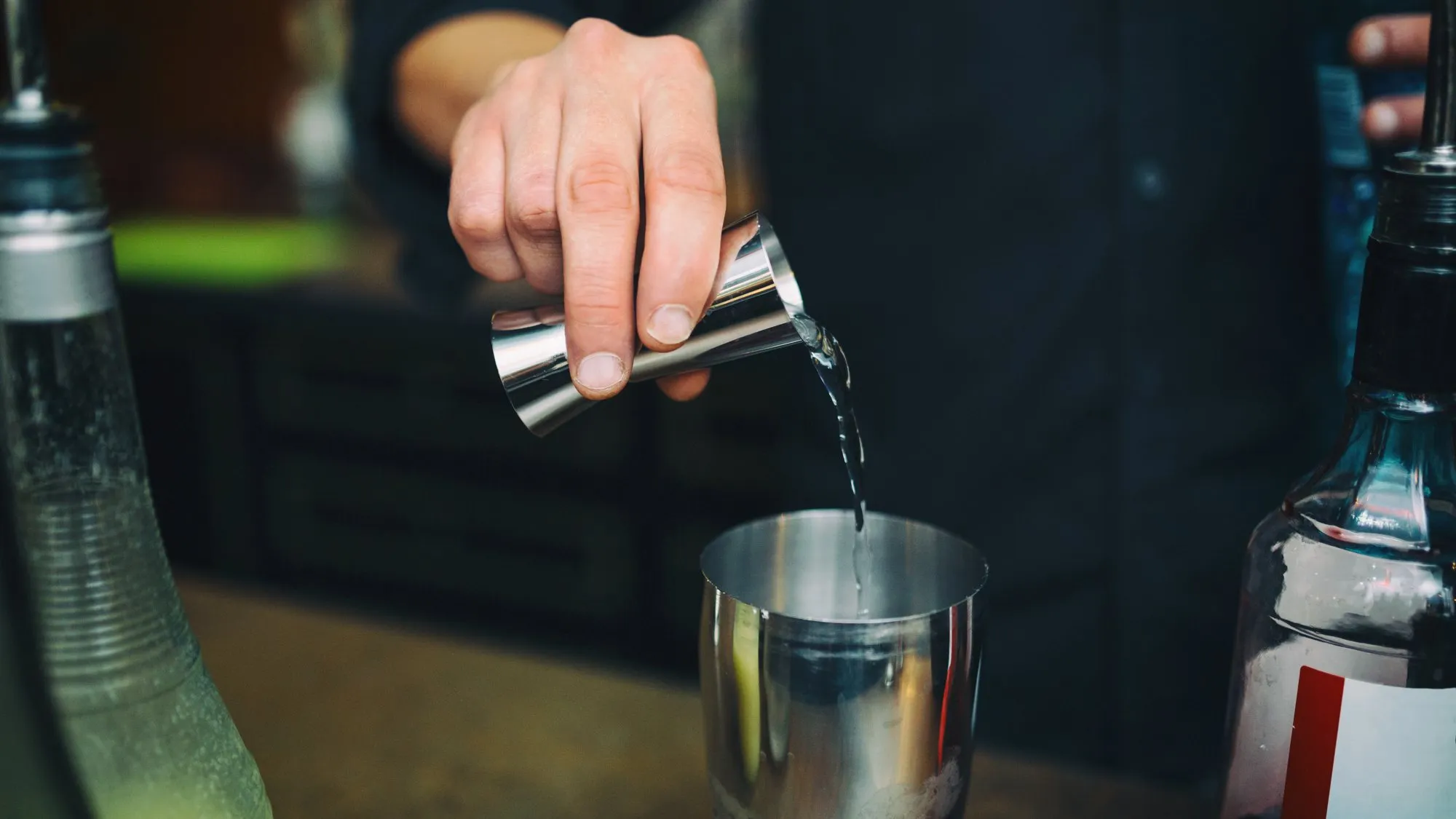
- Measuring. Practice pouring water with a jigger (the small two-sided measuring cup) until you can hit 1 ounce and 1.5 ounces without spilling.
- Core techniques. Learn the difference between building a drink in the glass, stirring and shaking, and how to strain.
- Classic recipes. Learn common drink families and a handful of standards, then expect to follow each bar’s own recipes.
- Tools and setup. Know what a shaker, strainer, bar spoon and muddler are for, and how to keep a clean, organized station.
What bartenders earn
The BLS reports a median hourly wage of $16.51 for bartenders in May 2025. That figure includes tips. The lowest-paid 10% earned less than $9.67 an hour, and the highest-paid 10% earned more than $35.47.
Pay varies by type of business. Median hourly wages in May 2025 by industry (BLS):
| Industry | Median hourly wage |
|---|---|
| Traveler accommodation (hotels) | $17.57 |
| Full-service restaurants | $17.07 |
| Drinking places (bars) | $16.01 |
| Amusement, gambling and recreation | $15.05 |
| Civic and social organizations | $13.65 |
Because so much of the pay is tips, earnings swing with the season, the shift and the crowd. Weekend nights usually pay more than weekday afternoons.
To see what an hourly figure means over a year, $16.51 an hour for 40 hours a week, 52 weeks a year, works out to about $34,340 before taxes. Many bartenders work part time, though, so actual yearly pay is often lower. Our guide to converting hourly pay to yearly pay walks through the math and take-home pay.
How tipped wages work
Under the federal Fair Labor Standards Act, a tipped employee is someone who regularly gets more than $30 a month in tips. For those workers, federal rules say:
- The employer must pay a cash wage of at least $2.13 an hour.
- The employer can count tips toward the rest of the federal minimum wage of $7.25, a “tip credit” of up to $5.12 an hour.
- If your cash wage plus tips doesn’t reach $7.25 an hour in a workweek, the employer must make up the difference.
- Employers, managers and supervisors can’t keep any of your tips, including through a tip pool.
- Employers can require tip pooling with other workers who customarily get tips, such as servers, bussers and service bartenders.
Many states require a higher cash wage or ban the tip credit entirely, so tipped workers get the full state minimum wage before tips. The Department of Labor publishes a state-by-state table of tipped minimum wages. When you’re offered a job, ask what the base hourly rate is, how tips are shared and when they’re paid out.
Job outlook
The BLS projects bartender employment to grow 5% from 2025 to 2035, faster than the average for all jobs, with about 121,200 openings a year on average. Most of those openings come from people leaving the job or changing careers, which is one reason entry-level bar jobs open up regularly.
Frequently asked questions
How long does it take to become a bartender?
It depends on your route. Alcohol server training is often a single short course. On-the-job bartender training typically lasts a few weeks, according to the BLS. Many people spend months as a barback or server first while they wait for a bartending spot.
Can you become a bartender with no experience?
Yes. The BLS says bartenders typically don’t need related work experience to enter the job. In practice, many bars prefer to promote barbacks or servers, so an entry-level role there is a common way in.
Do you need a license to bartend?
There’s no general bartending license. Some states require alcohol server certification (such as California’s RBS), and some cities or employers require it where the state doesn’t. Check your state alcohol agency’s website.
Can you bartend at 18?
In most states, yes, according to the BLS. But some states require bartenders to be 21, some let 18- to 20-year-olds serve but not pour, and some require a 21-plus manager on site. Employers can also set their own minimum.
Is bartending school worth it?
It isn’t required for most jobs. It can help you practice before your first shift, but employers will still train you on their own menu and rules, and a school certificate doesn’t replace state-required server training.