How much do truck drivers make? Pay by type of driving
Heavy and tractor-trailer truck drivers earned a median $58,640 a year in May 2025. See how pay varies by type of driving, pay method and owner-operator costs.
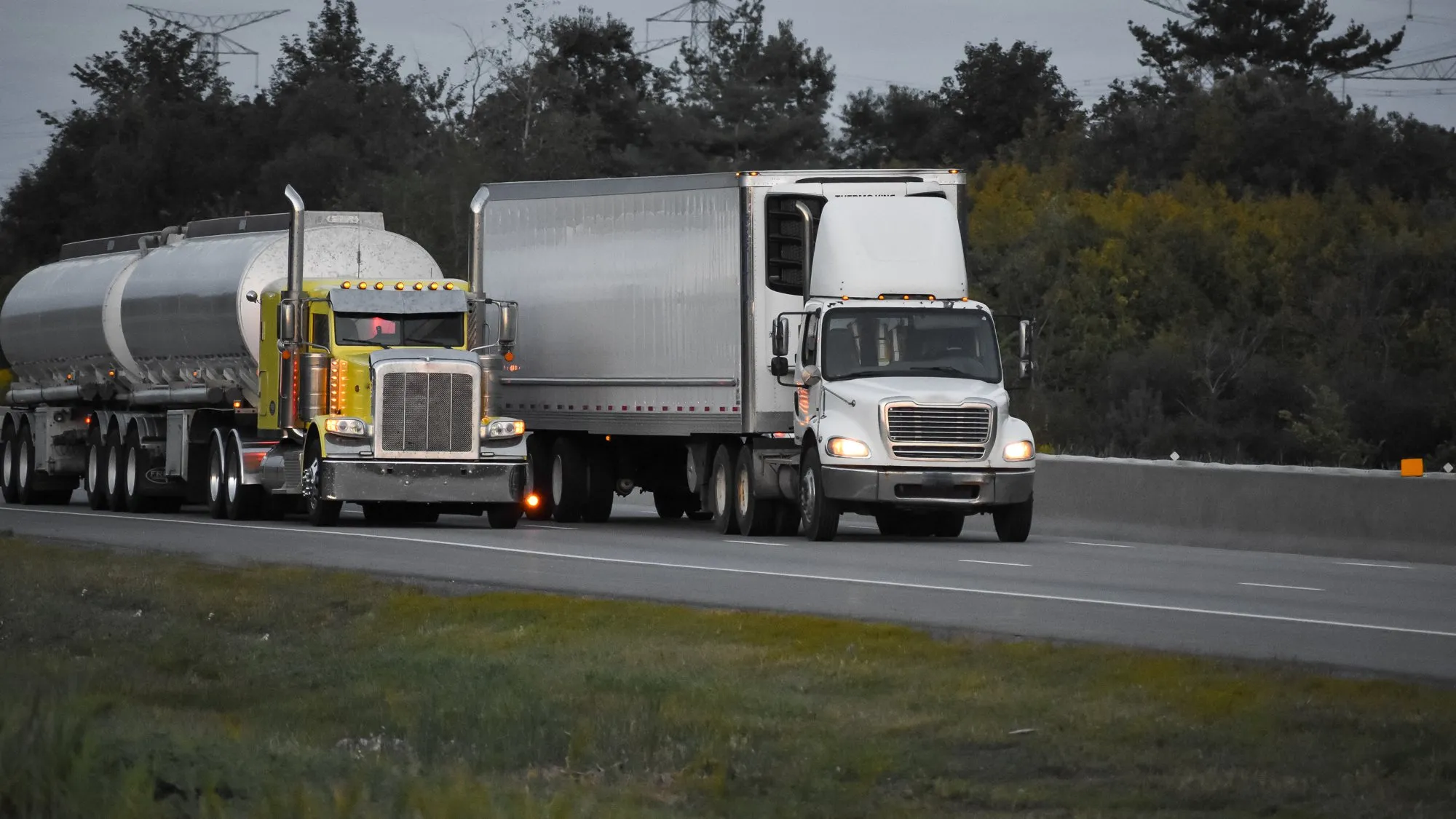
Heavy and tractor-trailer truck drivers earned a median of $58,640 a year ($28.19 an hour) in May 2025, according to the Bureau of Labor Statistics. Light truck drivers, who drive smaller delivery trucks, earned a median of $44,860.
Those are national midpoints for employees. What you’d earn depends on the kind of driving, how the company pays you (by the mile, by the hour or by the load) and, if you own your truck, what it costs to run. Here’s how each of those works.
Key takeaways
- The median wage for heavy and tractor-trailer truck drivers was $58,640 in May 2025, above the $50,980 median for all occupations (BLS).
- Light truck drivers had a median of $44,860. Most don’t need a commercial driver’s license (CDL).
- Heavy-truck drivers are usually paid by the mile plus bonuses, and some owner-operators are paid a share of the freight revenue.
- Many interstate truck drivers are exempt from federal overtime pay under the Motor Carrier Act exemption.
- To drive a tractor-trailer you need a Class A CDL, federally required entry-level training, and a DOT medical certificate that’s valid for up to 24 months.
Truck driver pay at a glance
The Bureau of Labor Statistics (BLS) publishes wages for two main truck-driving occupations. The median is the middle point: half of drivers earned more and half earned less.
| Occupation | Median a year | Median an hour | Lowest 10% earned less than | Highest 10% earned more than |
|---|---|---|---|---|
| Heavy and tractor-trailer truck drivers | $58,640 | $28.19 | $40,140 | $79,380 |
| Light truck drivers | $44,860 | $21.57 | $30,800 | $80,310 |
| All occupations (for comparison) | $50,980 | $24.51 |
Source: BLS Occupational Employment and Wage Statistics and Occupational Outlook Handbook, May 2025.
Heavy and tractor-trailer drivers operate trucks with a total weight over 26,000 pounds, including the vehicle, passengers and cargo, according to BLS. Light truck drivers handle trucks under 26,001 pounds, usually on local delivery routes.
These figures cover employees only. BLS wage data doesn’t include self-employed workers, so owner-operators aren’t in the numbers.
Pay by industry
Where you drive also matters. BLS reports these May 2025 medians for heavy and tractor-trailer drivers in their largest industries:
| Industry | Median a year |
|---|---|
| Truck transportation | $60,320 |
| Wholesale trade | $58,550 |
| Manufacturing | $56,570 |
| Construction | $56,080 |
Truck transportation is the biggest employer by far, with about 40% of these jobs.
Pay by type of driving
Job titles vary from company to company, but most truck-driving work falls into a few broad types. There’s no official pay figure for each one, so treat this as a guide to how each type earns money, not a ranking.
Long-haul (over-the-road)
Long-haul drivers move freight between cities, sometimes across several states, and can be away from home for days or weeks at a time. BLS says most tractor-trailer drivers are long-haul drivers. Pay is usually per mile, so your earnings rise and fall with how many paid miles you get each week.
Some companies run team drivers on long trips: one person drives while the other sleeps in the berth behind the cab, so the truck keeps moving.
Regional
Regional drivers cover a smaller area, often a group of neighboring states, and usually get home more often than long-haul drivers. Pay methods are similar, typically per mile, but with shorter trips and more regular home time.
Local and less-than-truckload (LTL)
Local drivers run routes from a terminal or warehouse and are usually home every night. Pay is more often hourly, by the route or by the stop. LTL carriers combine smaller shipments from several customers, so drivers may run between terminals at night or make local pickups and deliveries during the day.
Specialized freight
Hazardous materials, tankers carrying liquids, oversized loads and car haulers each come with extra rules, endorsements or skills. Hauling hazmat, for example, requires a hazardous materials (H) endorsement on your CDL, which means an extra knowledge test and a background check. Specialized work can pay more, but rates depend on the employer.
Light trucks and delivery
Light truck drivers pick up and drop off packages and smaller shipments in a local area. Most light trucks don’t require a CDL; BLS says delivery drivers need a regular driver’s license from their state and a clean driving record. Pay is often hourly. Notice that the top 10% of light truck drivers earned more than $80,310, slightly above the top 10% of heavy-truck drivers, so a delivery job isn’t automatically the lower-paying choice.
How truck drivers are paid
The posted rate only tells you part of the story. Before you compare offers, find out exactly how each job calculates pay.
By the mile
BLS says heavy and tractor-trailer drivers are usually paid by the number of miles they drive, plus bonuses. The per-mile rate varies by employer and can depend on the type of cargo and your experience. Questions to ask:
- How are miles counted, and do you get paid for every mile you actually drive?
- Is there separate pay for time spent waiting to load or unload, extra stops or layovers?
- Is there a minimum weekly pay if freight is slow?
- What bonuses are offered (for example, for safety or fuel efficiency), and what does it take to earn them?
By the hour
Hourly pay is common in local and delivery driving. Ask when the clock starts and stops, whether pre-trip inspections and loading count as paid time, and whether overtime is paid.
By the load or a percentage
Some long-distance drivers, especially owner-operators, are paid a share of the revenue from each shipment, according to BLS. Others get a flat amount per load. Under these deals, your pay depends on freight rates as well as your own effort.
Why hours limit what you can earn
Federal hours-of-service rules cap how much a truck driver can work. Under FMCSA rules for property-carrying drivers:
- you can drive up to 11 hours after 10 consecutive hours off duty
- you can’t drive beyond the 14th hour after coming on duty
- you can’t drive after 60 hours on duty in 7 days or 70 hours in 8 days; if your company allows it, 34 consecutive hours off resets that clock
Because of those limits, a per-mile driver can’t simply drive more to earn more. Time lost in traffic, at docks or waiting for a load comes out of the same capped hours.
Do truck drivers get overtime?
Often not. Section 13(b)(1) of the federal Fair Labor Standards Act has an overtime exemption for employees whose qualifications and hours the Secretary of Transportation can regulate under the Motor Carrier Act. According to the Department of Labor, it applies to workers who are:
- employed by a motor carrier or motor private carrier (a company that hauls freight for pay, or one that hauls its own goods as part of its business)
- drivers, driver’s helpers, loaders or mechanics whose duties affect the safe operation of motor vehicles on public highways in interstate or foreign commerce
- not covered by the small vehicle exception
The small vehicle exception means federal overtime rules apply again in any workweek you work on vehicles weighing 10,000 pounds or less (with exceptions for some passenger and placarded hazmat vehicles). That’s why some light delivery drivers are paid overtime while most tractor-trailer drivers aren’t.
The exemption covers overtime, and state law can add its own protections. If you’re not sure whether you’re owed overtime, the Department of Labor’s Wage and Hour Division and your state labor department can answer questions.
What owner-operators actually keep
Owner-operators buy or lease their own trucks and run a business. On top of driving, BLS notes, they handle tasks like finding and keeping customers and doing paperwork.
A load’s gross pay isn’t your income. Out of it you pay:
- fuel
- truck payments or lease costs
- maintenance, repairs and tires
- insurance, permits and registration
- tolls and other road charges
- business costs such as phone, software and accounting
You also pay self-employment tax. The Social Security Administration puts the combined Social Security and Medicare rate for self-employed workers at 15.3%, since you pay both the employee and employer halves, on top of federal and any state income tax.
Because of those costs, compare an owner-operator deal with a company driver job on what’s left after expenses and taxes, not on gross revenue.
How to start driving a truck
Get a CDL
You need a CDL to drive a commercial motor vehicle in these classes, set by FMCSA:
- Class A: a combination of vehicles weighing 26,001 pounds or more in total, where the towed unit weighs more than 10,000 pounds (a typical tractor-trailer)
- Class B: a single vehicle weighing 26,001 pounds or more, such as a large straight truck
- Class C: smaller vehicles built to carry 16 or more people, including the driver, or carrying placarded hazardous materials
States issue CDLs, not FMCSA, so fees and paperwork vary. You must be at least 21 to drive a truck across state lines. States set their own rules for younger drivers who stay within one state.
The steps
- Get a commercial learner’s permit (CLP). You pass the knowledge tests for the type of driving you want, your state checks your driving record for the past 10 years, and you show proof that you’re medically qualified.
- Pass a DOT physical. Most commercial driving requires a DOT medical card. The exam must be done by a medical examiner listed on FMCSA’s National Registry, and the certificate is valid for up to 24 months.
- Complete entry-level driver training. If you’re getting a Class A or B CDL for the first time, upgrading from B to A, or adding a school bus, passenger or hazmat endorsement for the first time, you must train with a provider listed on FMCSA’s Training Provider Registry. Drivers who got their CDL or endorsement before February 7, 2022 don’t have to go back.
- Hold your CLP for at least 14 days, then take the skills test. It has three parts: a vehicle inspection test, a basic controls test and a road test.
BLS says truck-driving programs at private schools and community colleges typically last 3 to 6 months. After you’re hired, expect several weeks of on-the-job training with an experienced driver riding along. If a trucking company offers to pay for your training, ask for the terms in writing, including whether you’d owe anything if you leave early.
Frequently asked questions
How much do truck drivers make an hour?
The median for heavy and tractor-trailer truck drivers was $28.19 an hour in May 2025, and $21.57 for light truck drivers (BLS). Many long-haul drivers are paid by the mile, so the hourly figure is a way to compare, not how their paycheck is figured. To see what an hourly rate adds up to over a year, see how much $20 an hour is a year.
How much do truck drivers make a week?
The May 2025 median annual wage of $58,640 for heavy and tractor-trailer drivers works out to about $1,128 a week before taxes. Weekly pay for per-mile drivers can swing up and down with the miles they get.
How much do truck drivers make per mile?
There’s no official per-mile figure. BLS says the rate varies by employer and can depend on the cargo and your experience. When you compare per-mile offers, check how miles are counted and what you’re paid for time that isn’t spent driving.
Can truck drivers make $100,000 a year?
It’s possible but uncommon for employees. BLS says the top 10% of heavy and tractor-trailer drivers earned more than $79,380 in May 2025, so $100,000 is well above what most company drivers make. Owner-operators can bring in more gross revenue, but they pay the truck’s costs out of it.
What type of truck driving pays the most?
Among the industries BLS lists, truck transportation had the highest median for heavy and tractor-trailer drivers, at $60,320 in May 2025. Beyond that, pay depends on the employer, freight, endorsements such as hazmat, and how many hours and miles you work.