How to get a CDL: permits, training and the skills test
The steps to a commercial driver's license: pick a class, get your learner's permit, finish required training, then pass the three-part skills test.
Getting a commercial driver’s license (CDL) comes down to three steps: get a commercial learner’s permit (CLP) by passing written knowledge tests, complete federally required training if it applies to you, then pass a three-part skills test in the kind of vehicle you want to drive. Your state issues the license, but most of the rules come from the Federal Motor Carrier Safety Administration (FMCSA), so the process looks much the same everywhere.
Here’s how each step works, how long it takes and what to check before you pay for training.
Key takeaways
- There are three CDL classes. Class A covers tractor-trailers and other heavy combinations, Class B covers heavy single vehicles such as straight trucks and buses, and Class C covers smaller vehicles that carry 16 or more people or placarded hazardous materials.
- You must be at least 18 to get a CLP, and at least 21 to drive a commercial vehicle across state lines under federal rules.
- You have to hold your CLP for at least 14 days before you can take the skills test.
- First-time Class A and Class B applicants must finish Entry-Level Driver Training (ELDT) with a provider on FMCSA’s Training Provider Registry before the skills test. There’s no federal minimum number of hours.
- The skills test has three parts: vehicle inspection, basic vehicle control and a road test.
- Heavy and tractor-trailer truck drivers earned a median of $58,640 a year in May 2025, according to the Bureau of Labor Statistics.
Step 1: Decide which CDL class you need
Pick the class before anything else, because it decides which tests you take, what training you need and what vehicle you test in. Federal rules (49 CFR 383.91) define the classes by weight rating:
| Class | What it covers | Typical vehicles |
|---|---|---|
| A | A combination of vehicles with a gross combination weight rating of 26,001 pounds or more, when the vehicle being towed is rated over 10,000 pounds | Tractor-trailers, truck and trailer combinations, some livestock and tanker rigs |
| B | A single vehicle rated 26,001 pounds or more, or one towing a vehicle rated 10,000 pounds or less | Straight trucks, box trucks, dump trucks, city and school buses |
| C | A vehicle that isn’t Class A or B but is designed to carry 16 or more people including the driver, or is used to haul placarded hazardous materials | Passenger vans, small buses, small hazmat vehicles |
A Class A license generally lets you drive Class B and C vehicles too, as long as you have any endorsements those vehicles need.
Endorsements
Endorsements add specific privileges to your license. Each one needs its own knowledge test, and some also need a skills test:
- H: hazardous materials (also requires a federal security threat assessment)
- N: tank vehicles
- P: passenger vehicles
- S: school buses
- T: double or triple trailers
- X: tank vehicles carrying hazardous materials (H and N combined)
If you’re not sure what you need, look at the job listings you’re interested in. They usually say which class and endorsements are required.
Step 2: Check that you qualify
Age
Under 49 CFR 383.25, you must be at least 18 to get a CLP. To drive a commercial vehicle in interstate commerce (crossing state lines, or carrying cargo that’s part of an interstate trip), federal rules in 49 CFR 391.11 require you to be at least 21. Many states let 18- to 20-year-olds drive commercially within the state only. Check your state’s CDL manual.
Driving record and drug testing
Before issuing a CLP, your state checks your driving record for the past 10 years in all 50 states and the District of Columbia. Since November 18, 2024, states must also check FMCSA’s Drug and Alcohol Clearinghouse and can’t issue, renew or upgrade a CLP or CDL for someone the Clearinghouse shows as prohibited from driving.
The DOT medical exam
Most commercial drivers need a Medical Examiner’s Certificate, often called a DOT medical card. The exam must be done by a medical examiner listed on FMCSA’s National Registry. It covers your health history, vision, hearing, blood pressure and general fitness to drive.
A certificate is good for up to 24 months. Some drivers get a shorter one, for example those with insulin-treated diabetes or certain vision conditions, who must be re-examined every 12 months. When you apply, your state will also ask you to certify what kind of driving you’ll do (interstate or intrastate), which affects whether you need to keep a medical certificate on file.
English
Federal rules require commercial drivers in interstate commerce to read and speak English well enough to talk with the public, understand road signs, answer officials’ questions and fill out reports. During the skills test, you must understand and respond to the examiner’s instructions in English, and interpreters aren’t allowed.
Step 3: Get your commercial learner’s permit
A CLP lets you practice driving a commercial vehicle on public roads, but only with a qualified CDL holder beside you. To get one, you’ll generally need:
- a valid regular driver’s license
- documents your state accepts to prove your identity and residency
- your medical certificate, if your type of driving requires one
- the permit fee, which varies by state
- passing scores on the required knowledge tests
The knowledge tests
Everyone takes the general knowledge test. Depending on your class and vehicle, you’ll also take tests such as air brakes and combination vehicles (for Class A), plus a test for each endorsement you want. Your state’s CDL manual covers everything on the tests; FMCSA says getting a copy is the first step. Most states post it online for free.
You can’t pick up a hazardous materials endorsement on a CLP. You can get P, S or N endorsements on a permit, but with limits: no passengers other than trainers, examiners and other trainees, and N-endorsed permit holders may drive only empty tank vehicles.
Rules while you hold a CLP
- A CDL holder with the right class and endorsements must be with you at all times, sitting in the front seat beside you (or directly behind you on a bus).
- You can’t haul hazardous materials.
- A CLP is valid for no more than one year from when it’s first issued. Some states issue it for a shorter period with a renewal option.
- You must hold it for at least 14 days before you can take the skills test.
Step 4: Complete Entry-Level Driver Training, if it applies
Since February 7, 2022, you must complete ELDT before the skills test if you’re:
- getting a Class A or Class B CDL for the first time
- upgrading from Class B to Class A
- getting an S, P or H endorsement for the first time (for H, before the hazmat knowledge test)
If you’re only getting a Class C, ELDT doesn’t apply unless you’re adding one of those endorsements.
ELDT has two parts: theory (classroom or online instruction) and behind-the-wheel training on a range and on public roads. The training must come from a provider listed on FMCSA’s Training Provider Registry at tpr.fmcsa.dot.gov. Federal rules don’t set a minimum number of hours for either part. Instead, the trainer must cover every topic in the federal curriculum and document that you’ve shown proficiency in each behind-the-wheel skill.
When you finish, the provider reports your completion to the registry electronically. You can confirm it with the registry’s “Check My Record” tool before your test date. Your state can’t give you the skills test until that record is there. Some states add their own training rules on top of the federal ones.
You can start the theory part before or after you get your CLP. There’s no federal requirement to finish theory first.
Step 5: Pass the skills test
The CDL skills test has three parts, and you must pass all of them:
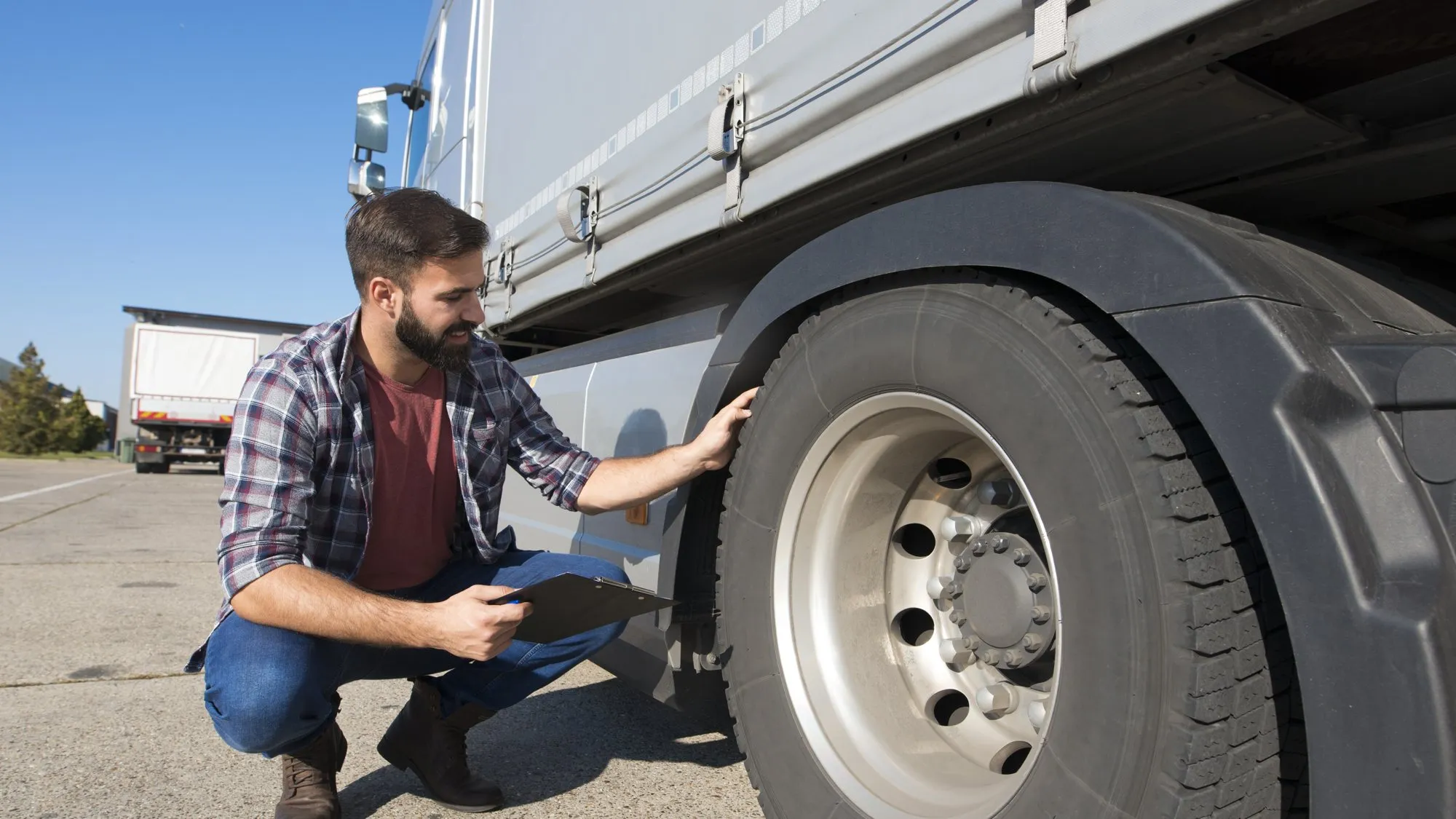
- Vehicle inspection. You walk around the vehicle and show the examiner you know how to check that it’s safe to drive. Some states let you use a printed memory aid.
- Basic vehicle control. You complete backing and maneuvering exercises, usually in a closed area.
- Road test. You drive on public roads in traffic while the examiner scores you.
You test in a vehicle that matches the class you want, and you usually have to supply it. Many training providers include use of their truck for the test. The vehicle you test in also matters for restrictions on your license:
- test in a vehicle with an automatic transmission and you’ll get a restriction barring manual-transmission vehicles
- test in a vehicle without full air brakes and you’ll get an air brake restriction
- test for Class A in a combination that isn’t a tractor-trailer and you’ll get a restriction barring tractor-trailers
Once you pass, you take your paperwork to the licensing office. Some states hand you the CDL the same day; others mail it.
How long does it take to get a CDL?
The fastest you can legally move is the 14-day CLP holding period plus your training and test scheduling. In practice:
- The Bureau of Labor Statistics says truck-driving programs at private schools and community colleges last between 3 and 6 months. Shorter full-time programs exist, and part-time schedules take longer.
- Skills test wait times depend on your state and season.
- Retests add time if you don’t pass a part on the first try.
How much does it cost, and who pays?
Costs vary a lot by state and training provider, so there’s no single price. Budget for:
- training tuition, which is usually the biggest cost
- CLP, testing and license fees set by your state
- the DOT medical exam
- travel or lodging if the training isn’t local
Ask any training provider for a written breakdown of what’s included, whether you’ll train on the same type of truck you’ll test in, and what retests or extra driving time cost. Confirm the provider is on the Training Provider Registry before you pay.
Ways to lower the cost:
- Employer-paid training. Some trucking companies and bus operators train new drivers or repay tuition after you’re hired. Read the agreement closely: many require you to stay for a set time and repay part of the cost if you leave early.
- Public workforce funding. If you’ve been laid off or have a low income, you may qualify for training funds under the Workforce Innovation and Opportunity Act. Ask your local American Job Center.
- Veterans’ benefits. Some training programs are approved for VA education benefits. Check with the VA before you enroll.
What CDL drivers earn
According to the Bureau of Labor Statistics, heavy and tractor-trailer truck drivers earned a median of $58,640 a year, or $28.19 an hour, in May 2025. Half earned more and half earned less. Pay varies by region, employer, type of freight and whether you’re paid by the mile, the hour or the load. If you’re comparing an hourly offer to other work, our guide to what $20 an hour adds up to in a year shows how to do the math.
BLS projects employment of heavy and tractor-trailer truck drivers to grow 4% from 2025 to 2035, about as fast as average, with about 214,500 openings a year on average, mostly to replace drivers who retire or change jobs.
Frequently asked questions
Can I get a CDL without going to truck driving school?
If you’re getting your first Class A or Class B CDL, you must complete Entry-Level Driver Training with a provider on FMCSA’s Training Provider Registry. That provider can be a school, a community college, an employer’s in-house program or another registered trainer. You can’t skip registered training and go straight to the skills test.
How old do you have to be to get a CDL?
At least 18 for a CLP and a CDL for driving within your state, where the state allows it. You must be at least 21 to drive a commercial vehicle across state lines.
How long is a CDL learner’s permit good for?
No more than one year from when it’s first issued under federal rules. You must hold it for at least 14 days before taking the skills test.
Do I need a CDL to drive a box truck?
Only if the truck has a gross vehicle weight rating of 26,001 pounds or more, or it’s designed to carry 16 or more people or used for placarded hazardous materials. Many smaller box and delivery trucks don’t need a CDL. The weight rating is on a label inside the driver’s door.
What’s on the CDL written test?
Every applicant takes the general knowledge test. Depending on your class and equipment, you may also take air brakes and combination vehicles tests, plus tests for each endorsement you want. Your state’s CDL manual covers all of it.