How to become an electrician: apprenticeship, license and pay
Most electricians learn through a 4- or 5-year paid apprenticeship, then pass a state license exam. Here's how to start, what it pays and how licensing works.
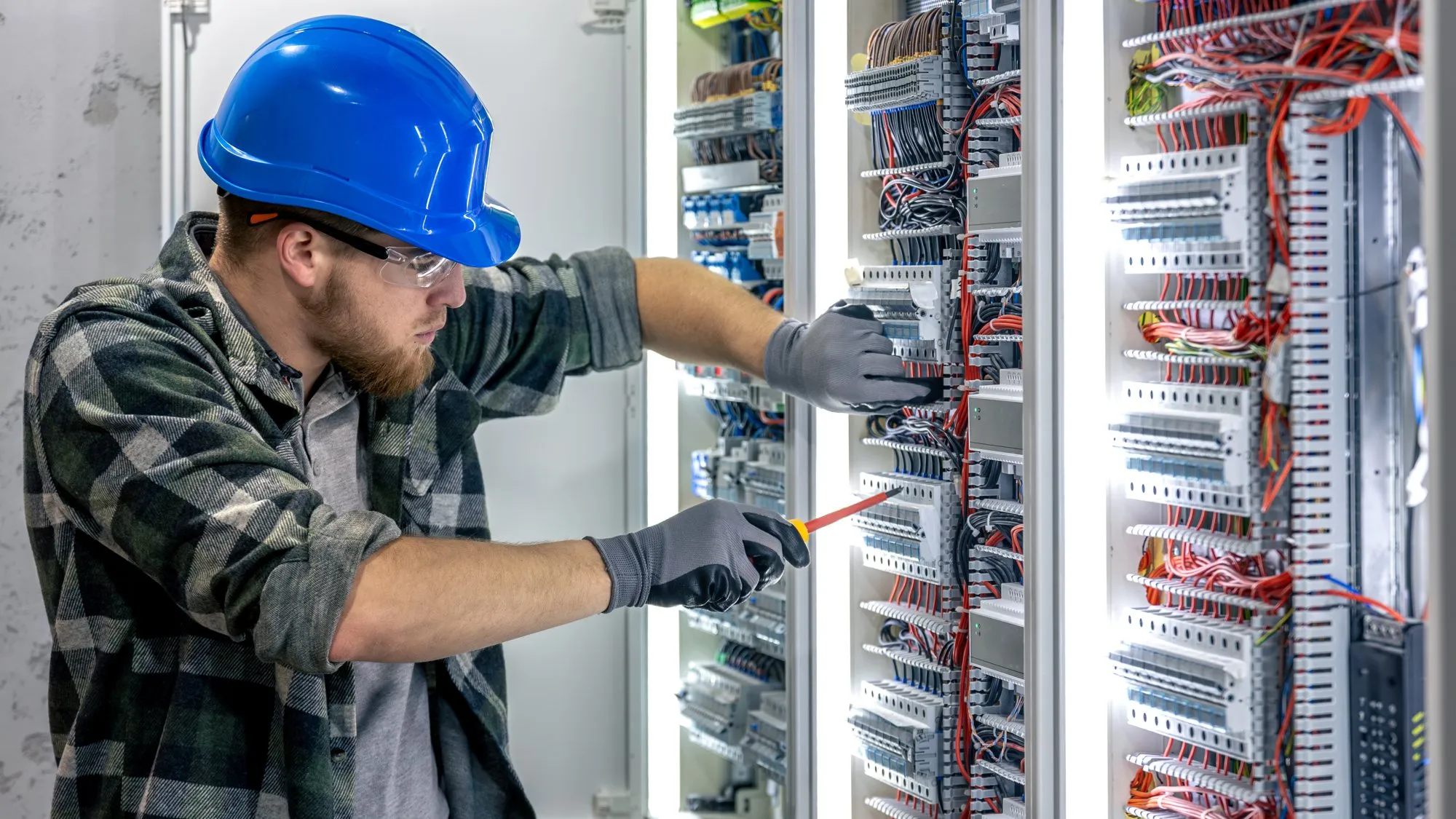
Electricians install, maintain and repair the wiring, lighting and control systems that power homes, businesses and factories. It’s one of the most common routes into a skilled trade, and you don’t need a college degree. Most electricians learn through a paid apprenticeship that lasts four to five years.
This guide covers the paths into the trade, what you need to start, how licensing works, what electricians earn and where to look for an apprenticeship.
Key takeaways
- Most electricians learn through a 4- or 5-year apprenticeship, according to the Bureau of Labor Statistics (BLS). Apprentices typically get about 2,000 hours of paid on-the-job training per year, plus classroom instruction.
- You need a high school diploma or equivalent. No prior work experience is typically required.
- Most states require electricians to pass a test and be licensed. Rules vary by state, so contact your local or state electrical licensing board.
- The median pay for electricians was $63,190 a year ($30.38 an hour) in May 2025, and the BLS projects 9% job growth from 2025 to 2035, much faster than average.
- You can find registered apprenticeships through the Apprenticeship Job Finder on Apprenticeship.gov.
Two ways to start
1. Apprenticeship
The BLS says most electricians learn through an apprenticeship. You work under experienced electricians and get technical instruction in subjects such as electrical theory, blueprint reading, mathematics, electrical code requirements and safety and first aid. Some programs add specialized training in areas such as soldering, communications, fire alarm systems and elevators.
Apprenticeship programs are sponsored by groups that include unions and contractor associations. Requirements vary by state and locality. Some electrical contractors run their own training programs that aren’t recognized apprenticeship programs but include both technical and on-the-job training. If you’re considering one, ask whether it’s a registered apprenticeship and what credential you’ll get.
After you finish an apprenticeship, you’re considered a journey worker and can perform duties on your own, subject to local or state licensing requirements.
2. Technical school, then apprenticeship
The BLS says some electricians start out at a technical school. Many technical schools offer programs in circuitry, safety practices and basic electrical information, and graduates usually receive credit toward their apprenticeship.
School can help you get ready, but it doesn’t replace the apprenticeship for most people. Before you pay tuition, ask whether the credit transfers to the apprenticeship programs near you.
Shortcuts for experienced workers
Workers who gained electrical experience in the military or in the construction industry may qualify for a shortened apprenticeship based on their experience and testing, the BLS says. Some people also enter apprenticeships after working as a construction helper.
What you need to start
- Education. A high school diploma or equivalent is required, according to the BLS.
- Experience. The BLS lists no prior work experience as typical for entry.
- Math. Apprentices study mathematics as part of their technical instruction, so being comfortable with basic math will help.
- Age. Sponsors set their own minimum qualifications. Under federal apprenticeship standards (29 CFR 29.5), the eligible starting age can’t be below 16, but programs may set a higher age, so check each program’s rules.
- Other qualities. The BLS notes electricians must be able to identify wires by color, need physical stamina and strength to move components that may weigh up to 50 pounds, and may be required to have a driver’s license.
Programs can have their own application steps, so ask each sponsor what it requires and when it accepts applications.
What the work involves
Day to day, electricians run wire, connect fixtures, test equipment and fix faults. The BLS describes several qualities that matter on the job:
- Troubleshooting. Electricians find, diagnose and repair problems. If a motor stops working, for example, they run tests to find the cause and then fix or replace it.
- Critical thinking. They use test results to decide what to do next, such as checking voltage, amperage or resistance with a multimeter when an outlet isn’t working.
- Customer service. Electricians work with people regularly and need to answer customers’ questions in a friendly way.
- Physical stamina and strength. The job means moving around all day and lifting heavy components.
If you’re comparing jobs, remember the trade is physical, and some roles involve work in homes, some on construction sites and some in commercial or industrial buildings. Ask any apprenticeship sponsor what kind of work its apprentices usually do.
What an apprenticeship is like
A registered apprenticeship combines a paid job with training. Apprenticeship.gov says apprentices get paid work experience with a mentor, progressive wage increases, classroom instruction and a portable, nationally recognized credential. Federal standards require a registered program to include a progressively increasing schedule of wages and recommend at least 144 hours of related instruction a year.
The BLS says that, in each year of a typical electrician program, apprentices receive about 2,000 hours of paid on-the-job training plus some technical instruction. Over four or five years, that adds up to roughly 8,000 to 10,000 hours of paid work experience.
Your pay will start below what a fully trained electrician earns and increase as you gain skills, so the BLS median below describes the middle of the whole trade, not a first-year wage.
How electrician licensing works
Most states require electricians to pass a test and be licensed, and requirements vary by state, the BLS says. You can look up your state’s licensing information using CareerOneStop’s license finder, or contact your local or state electrical licensing board.
A few common features:
- Exams. License tests have questions about the National Electrical Code and about state and local electrical codes, which set the standards for the safe installation of electrical wiring and equipment.
- Journey worker and master levels. After an apprenticeship, electricians are journey workers. After meeting additional requirements and working as a qualified electrician, journey workers may become master electricians. The titles and requirements differ by state and locality.
- Continuing education. Electricians may be required to take continuing education courses to maintain their licenses, usually on safety practices, changes to the electrical code and manufacturer training.
- Extra certifications. Electricians can add certifications in areas such as solar photovoltaic, electrical generating or lighting systems.
Because the rules differ so much, check with the board in the state where you plan to work before you start, especially if you might move. Don’t assume a license from one state transfers to another.
What electricians earn and the job outlook
The BLS reports that the median annual wage for electricians was $63,190 in May 2025, or $30.38 an hour. The median is the midpoint: half of electricians earned more and half earned less. That’s above the $50,980 median for all workers in May 2025. Actual pay varies by state, employer, specialty and hours worked.
The BLS projects employment of electricians to grow 9% from 2025 to 2035, much faster than the average for all occupations. In 2025 there were about 821,000 electrician jobs.
For how electricians compare with other trades that train without a degree, see the highest-paying trade jobs.
How to find an apprenticeship
- Use the Apprenticeship Job Finder. Apprenticeship.gov lets you search open apprenticeships by occupation and location, then apply directly with the employer or program sponsor.
- Visit an American Job Center. Apprenticeship.gov recommends your local American Job Center if you want more guidance getting started.
- Contact sponsors directly. Unions and contractor associations sponsor electrician programs, according to the BLS. Look for the training programs run by electrical unions and contractor groups in your area.
- Ask your state. Your state apprenticeship agency and electrical licensing board can tell you which programs they recognize and how apprentice hours count toward a license.
When you compare programs, ask about the application window, how long it lasts, the wage schedule, what classroom costs you’ll cover, and whether it leads to the license your state requires.
A simple checklist
- Get your high school diploma or equivalent if you don’t have one.
- Check your state’s licensing rules with its electrical licensing board.
- Search the Apprenticeship Job Finder and contact local sponsors.
- Complete the apprenticeship, keeping your records of hours and classes.
- Apply for your license when you meet the requirements and pass the exam.
Frequently asked questions
How long does it take to become an electrician?
Most electricians complete a 4- or 5-year apprenticeship, according to the BLS. After that, you may need to meet your state’s licensing requirements and pass an exam, which can add time, depending on where you live.
Do you need a license to be an electrician?
In most states, yes. The BLS says most states require electricians to pass a test and be licensed. Requirements vary, so contact your state or local licensing board.
Can you become an electrician with no experience?
Yes. The BLS lists no work experience as typical for entry, and apprenticeships exist to train beginners. You’ll need a high school diploma or equivalent, and each program sets its own application requirements.
Do electrician apprentices get paid?
Yes. Registered apprenticeships include paid on-the-job training, and wages rise as you gain skills. The BLS says apprentices typically get about 2,000 hours of paid on-the-job training each year. Your starting wage depends on the program.
Can you become an electrician without an apprenticeship?
Most electricians learn through an apprenticeship, and some start at a technical school first. Some contractors run their own training programs that aren’t recognized apprenticeships. What counts toward a license depends on your state, so check with your licensing board before choosing a route.
How much do electricians make?
The median annual wage was $63,190 in May 2025, or $30.38 an hour, according to the BLS. Pay varies with location, experience and employer, and apprentices earn less than fully trained electricians.