How to become a phlebotomist: training, certification and pay
Phlebotomy programs usually take under a year, and some employers train on the job. Here's what certification involves, which states need a credential and what it pays.
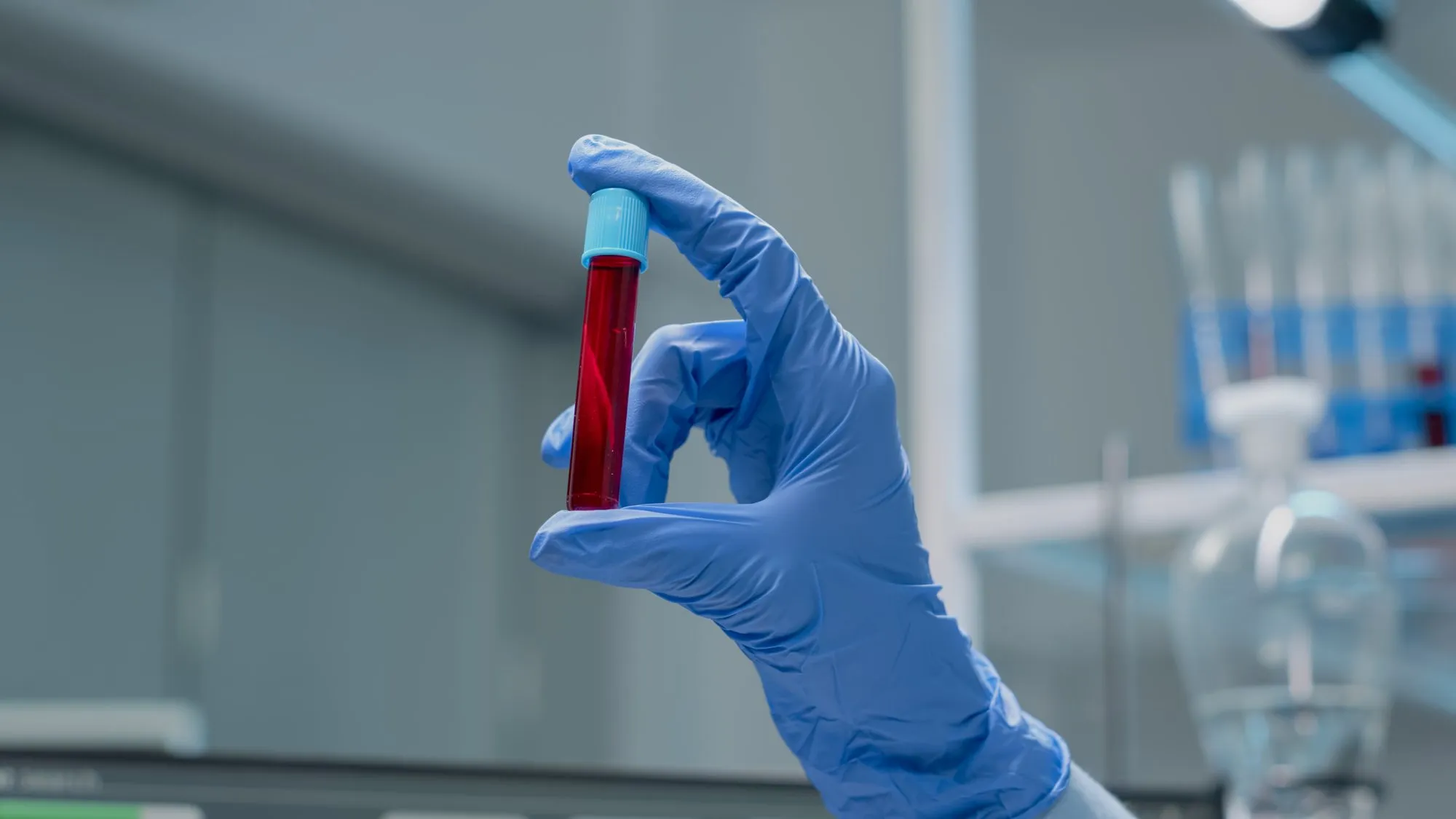
Phlebotomists draw blood for tests, transfusions, research and blood donations. It’s one of the shorter training routes into healthcare: most programs take less than a year, and some employers hire people with a high school diploma and train them on the job.
Whether you also need a license or certification depends on your state and your employer. This guide explains the training routes, how national certification and state credentials differ, and what the job pays.
Key takeaways
- Phlebotomists typically enter with a certificate from a postsecondary phlebotomy program, according to the Bureau of Labor Statistics (BLS). Programs usually take less than a year. Some employers hire people with a high school diploma and train them.
- Some states require phlebotomists to be certified or licensed. California does, and ASCP says a few other states do too, so check with your state health department.
- Many employers prefer candidates with national certification, such as NHA, AMT or ASCP credentials.
- The median pay was $45,230 a year ($21.75 an hour) in May 2025, and the BLS projects 7% job growth from 2025 to 2035, much faster than average.
- Check your state’s rules before you pay for a program. A course that doesn’t count in your state can be an expensive mistake.
What phlebotomists do
The BLS says phlebotomists draw blood from patients or donors, verify their identity, label the blood for testing or processing, enter sample information into a database and keep equipment clean and sanitary. They also explain the procedure to help nervous patients relax. Some collect urine or other samples and instruct patients on collection, and some ship or transport samples.
In 2025, the BLS says, about 36% of phlebotomists worked in hospitals, 33% in medical and diagnostic laboratories, 16% in other ambulatory healthcare services and 9% in physicians’ offices. Some work at blood drives or travel to long-term care centers or patients’ homes. The work involves standing for long periods, and phlebotomists in hospitals and labs may need to work nights, weekends and holidays.
Training options
Postsecondary programs
The BLS says phlebotomists typically enter the occupation with a postsecondary nondegree award from a phlebotomy program. Community colleges, vocational schools and technical schools offer them, and they usually take less than a year. They include instruction in anatomy, physiology, medical terminology and laboratory work, and they lead to a certificate.
The American Society for Clinical Pathology (ASCP) describes the same pattern: a program at a college, vocational or technical school, typically under a year, or on-the-job training with at least 40 hours of hands-on training in addition to coursework.
On-the-job training
Some employers hire candidates with a high school diploma and train them, according to the BLS. Whether you train in school or on the job, it says, the training includes how to identify, label and track blood samples. If you take this route, ask whether the employer’s training counts toward any certification or state credential you’ll need later.
Questions to ask any program
- Is the program approved or accepted in my state?
- Does it include supervised hands-on practice, and how many blood draws will I complete?
- Which certification exams does it prepare me for?
- What’s the full cost, including books, supplies, fees and exam charges?
Costs vary by school, so look at the full price rather than tuition alone. If you want help paying, ask the school’s financial aid office which grants and payment options apply to the program.
Do you need a license or certification?
Two separate things matter: state requirements and national certification.
State requirements
The BLS says states may require phlebotomists to complete an accredited training program, have a license or certification, or meet other requirements, and it tells readers to contact their state licensing agency. ASCP says a small number of states besides California also require state certification, so look up your own state’s rule. Rules can change, so confirm with the state health department or licensing agency before you enroll.
California’s Department of Public Health (CDPH) gives a detailed example. Its Certified Phlebotomy Technician I (CPT I) certificate authorizes skin puncture and venipuncture. For an applicant with no on-the-job phlebotomy experience, CDPH says you need:
- a high school diploma, or a passing result on the GED, HiSET or California High School Proficiency Examination, or college general education credit
- 40 hours of classroom training from a program accredited by CDPH
- 40 hours of practice in a clinical setting that includes at least 50 venipunctures and 10 skin punctures and observation of arterial punctures
- a passing score on a national certification exam from a certifying organization CDPH approves
CDPH lists those approved organizations as ACA, AMCA, AMT, ASCP, NCCT and NHA. The certificate must be renewed every year with a fee and proof of continuing education. CDPH notes the requirements it lists may not be comprehensive and are different for people with on-the-job experience, so read its page or contact it before you apply. Notably, it says work in a blood bank can’t count toward on-the-job experience for the certificate.
If your plan is to move to another state later, don’t assume a credential transfers.
National certification
Even where it’s not legally required, the BLS says some employers prefer to hire phlebotomists who’ve earned professional certification. Requirements vary by organization but may include education and clinical experience, an exam and practical components such as drawing blood. As of fall 2026, three common credentials have these eligibility basics:
| Credential | Education | Training or experience | Blood draws |
|---|---|---|---|
| NHA Certified Phlebotomy Technician (CPT) | High school diploma or GED, or scheduled to earn one within 18 months | Training program completed within the last 5 years, or work experience (1 year within 3 years, or 2 years within 5) | At least 30 venipunctures and 10 capillary or finger sticks on live individuals |
| AMT Registered Phlebotomy Technician (RPT) | Check AMT’s eligibility page | Approved phlebotomy course within the past 4 years with at least 120 classroom hours (or as state law requires), or other listed routes such as 1,040 hours of work experience within 3 years | At least 50 venipunctures and 10 skin punctures from human sources |
| ASCP Phlebotomy Technician (PBT) | High school graduation or equivalent | Several routes, including a NAACLS-accredited program within 5 years, a formal program with 40 classroom hours plus clinical training, or one year of full-time experience | 100 successful unaided venipunctures on the formal-program route |
Each organization has other routes, its own exam and its own fees, and these details change, so use the organization’s page before you apply. Your employer or state may accept only certain credentials.
How long it takes
There’s no single timeline. The BLS says programs usually take less than a year, and ASCP says the same of college and technical-school programs. After that, add time for:
- clinical practice, which must be arranged and scheduled
- a certification exam, if you want or need one
- a state application, if your state requires a credential
A short program with a local clinical site can move quickly. Where state paperwork is involved, processing times vary.
What phlebotomists earn
The BLS reports that the median annual wage for phlebotomists was $45,230 in May 2025, or $21.75 an hour. The median is the midpoint: half of workers earned more and half earned less. The lowest 10% earned less than $35,780 and the highest 10% earned more than $58,780. The median for all workers was $50,980.
Median pay differed by setting in May 2025:
| Industry | Median annual wage, May 2025 |
|---|---|
| Outpatient care centers | $48,030 |
| Medical and diagnostic laboratories | $46,670 |
| Offices of physicians | $44,500 |
| Hospitals (state, local and private) | $44,220 |
| All other ambulatory healthcare services | $39,930 |
These are national figures for the whole occupation. They’re not a starting wage, and your pay will depend on your location, employer, shift and experience.
Job outlook
The BLS projects employment of phlebotomists to grow 7% from 2025 to 2035, much faster than the 3% average for all occupations. There were about 143,900 phlebotomist jobs in 2025, and about 18,000 openings a year are projected on average over the decade. The BLS says many of those openings come from workers moving to other occupations or leaving the labor force, such as to retire. It expects demand to rise with the growing population and its larger share of older people, since blood tests are used to check for a wide range of problems.
Phlebotomy can also be a first step into other patient-care work, though other roles need their own training. For another short healthcare route, see how long it takes to become a CNA or how to become a pharmacy technician.
A simple checklist
- Check whether your state requires a license or certificate, using your state health department or licensing agency.
- Compare programs that your state and employers accept, and ask about clinical hours and total cost.
- Complete the training, keeping a record of your blood draws.
- Take a national certification exam if your state or employers want one.
- Apply for any state credential and keep your records ready to renew.
Frequently asked questions
How long does it take to become a phlebotomist?
Most postsecondary phlebotomy programs take less than a year, according to the BLS. Some employers train people on the job. Add time for clinical practice, any certification exam and any state application.
Do you need a license to be a phlebotomist?
Not in every state. California requires state certification, ASCP says a few other states do as well, and the BLS says states may have their own requirements. Check your state health or licensing agency, because the rules and the credential name differ.
Do you need certification to be a phlebotomist?
It depends. The BLS says some employers prefer to hire certified phlebotomists, and California requires passing a national exam as part of its state certificate. Where neither applies, you may be able to work with training alone.
Can you become a phlebotomist online?
Classroom lessons may be offered online, but the hands-on practice drawing blood has to be done in person. California, for example, requires 40 hours of clinical practice with at least 50 venipunctures and 10 skin punctures. Confirm that a program meets your state’s and employer’s requirements.
Do you need a high school diploma to become a phlebotomist?
Usually a diploma or equivalent. NHA and ASCP list a high school diploma or equivalent among their basics, and California accepts a GED, HiSET or CHSPE. Some employers train people on the job, so ask each employer what it requires.
How much do phlebotomists make?
The BLS reports a median annual wage of $45,230 in May 2025, or $21.75 an hour. Pay varies by location, employer and experience.