
Second chance bank accounts: what they are and how to open one
A second chance bank account is a low-fee checking account for people turned down because of past banking problems. Here's how they work and what to compare.
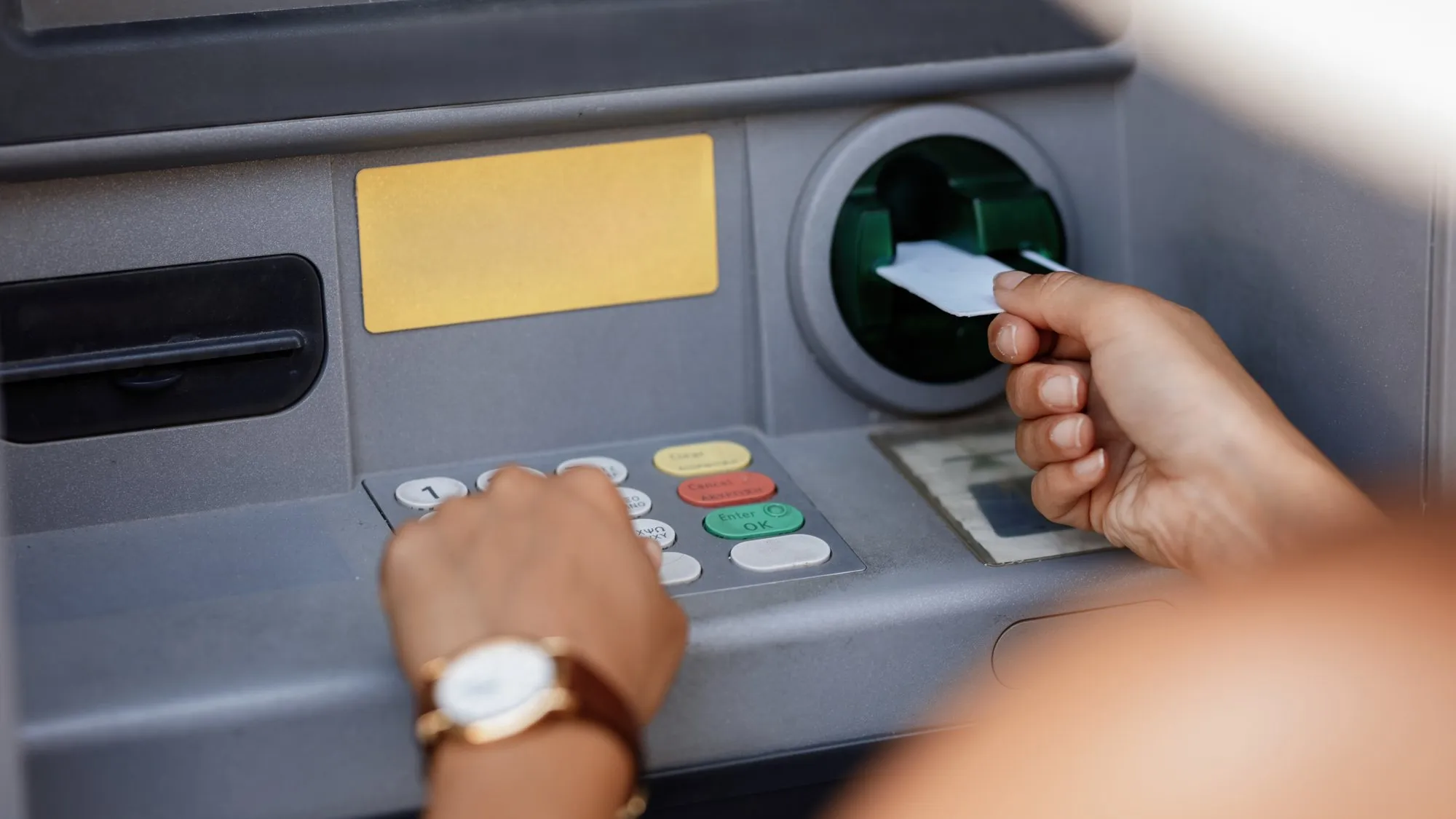
A second chance bank account is a checking account for people who’ve been turned down for a regular account because of problems in their banking history. The Consumer Financial Protection Bureau (CFPB) describes it as a “reduced-service and reduced-fee” account. You get the basics (a debit card, direct deposit, a place to keep your paycheck) with some limits while you rebuild your record.
Being turned down by a bank doesn’t mean you’re shut out of banking for good. This guide explains why banks say no, how long old problems follow you, what to compare before you apply, and how to keep the new account in good shape.
Key takeaways
- Banks check a checking account consumer report (from companies like ChexSystems or Early Warning Services), not just your credit report, when you apply.
- Negative records such as an unpaid overdraft or an account the bank closed can stay on that report for up to seven years, depending on the company, according to the CFPB.
- You can get one free report a year from each nationwide checking account reporting company, plus a free copy if a bank denies you based on it.
- Bank On certified accounts have no overdraft fees, an opening deposit of $25 or less and a monthly fee of $5 or less (or up to $10 if it can be waived).
- Compare the full fee schedule, ATM access and how the account handles a low balance, not just the advertised monthly fee.
Why banks turn people down
When you apply for a checking account, most banks and credit unions look up how you’ve handled accounts in the past. That information doesn’t come from your credit report. It comes from a checking account consumer report, compiled by specialty reporting companies. The two largest, according to the CFPB, are Chex Systems, Inc. (usually called ChexSystems) and Early Warning Services.
The CFPB lists the common problems that can stop you from opening a regular account:
- An overdraft or negative balance you didn’t repay, after which the bank closed your account (an “involuntary closure”)
- Bounced checks or a history of overdrafts
- A suspicion of fraud tied to a checking account
- A joint account with someone who had any of these problems
That last one catches people off guard. If you shared an account with a partner or relative who overdrew it, the record can show up on your report too.
How long negative records stay on your report
Under federal law, an involuntary closure can stay on your checking account report for up to seven years, depending on the reporting company. The CFPB notes this is true even if you later paid back the overdrawn balance.
Each bank sets its own rules for how it uses that history. Some look at how long ago the problem happened. Some won’t open any account until you’ve paid old fees and overdrafts from a closed account. Others offer a second chance account instead of a flat no.
What a second chance account is (and isn’t)
A second chance account is a real checking account at a bank or credit union. Your money is held like any other deposit, and you usually get a debit card and online banking. The difference is in the limits and the price.
Common trade-offs include:
- A monthly fee, sometimes one you can’t waive
- No paper checks, or limits on check writing
- No overdraft coverage. Purchases are declined if you don’t have the money.
- Lower daily limits on ATM withdrawals, debit purchases or transfers
- Fewer extras, such as no linked savings or no overdraft line of credit
Some banks let you move up to a standard account after a set period of good use. Others don’t. If upgrading matters to you, ask whether the account has a path to a standard account and what you have to do to qualify.
Second chance accounts vs. prepaid cards
A prepaid debit card can work like a bank account for paying bills and getting paid. But it isn’t a checking account. It doesn’t build a banking history with a bank or credit union, and fees for loading cash, using ATMs or calling customer service can add up. If you can get a second chance or Bank On account, compare its costs against the card’s full fee list before deciding.
Bank On certified accounts
Bank On is a national program that certifies low-cost accounts at banks and credit unions. An account that meets the Bank On National Account Standards for 2025-2026 must include:
| Feature | Bank On standard |
|---|---|
| Opening deposit | $25 or less |
| Monthly fee | $5 or less, or up to $10 if there are at least two easy ways to waive it |
| Overdraft and bounced-payment (NSF) fees | None |
| Low-balance, inactivity, dormancy, opening or closing fees | None |
| Debit card | Free, on a major card network |
| In-network ATMs | Free and unrestricted |
| Out-of-network ATM fee | $2.50 or less (up to $3 with a free partner network) |
| Cash and check deposits | Free at branches and ATMs where available; free direct deposit |
| Online and mobile banking, alerts | Free, if offered |
| Paper statements | Free electronic statements; $2 or less for mailed ones |
The standards also strongly recommend that banks only turn down Bank On applicants for past actual fraud, and that they accept ITINs and other government IDs (such as municipal or consular IDs). Those parts are recommendations, not requirements. A Bank On account at one bank may still check ChexSystems.
Even with certification, terms differ by institution. Read the account’s own fee schedule before you apply.
What to compare before you apply
A low monthly fee can still cost you more than a higher one if the account charges for things you do every week. Look at how you actually use money, then check:
- Monthly fee and how to waive it. Note the exact rule, such as a direct deposit of any amount or a minimum balance.
- Opening deposit and minimum balance. If your income varies, an account without a minimum balance is easier to keep.
- ATM access. Where can you get cash for free? What does an out-of-network ATM cost, counting the ATM owner’s fee too?
- Cash and check deposits. If you’re paid in cash or by paper check, find out where you can deposit it and how long until the money is available.
- Overdraft handling. Ask whether transactions are declined when your balance is too low, and whether returned payments carry a fee.
- Limits. Check daily limits on withdrawals, debit purchases and transfers, and whether you can pay rent or bills through the account.
- Upgrade path. Can you move to a standard account later, and when?
Federally insured banks are backed by the FDIC, and most credit unions by the NCUA’s insurance fund. Check that the account is at an insured institution. Some apps that look like banks are actually partners of a bank, so look for the name of the insured bank in the account terms.
How to open a second chance account
1. Get your checking account report
Before you apply, find out what banks will see. Nationwide checking account reporting companies must give you one free report a year if you ask, and you have to request each company’s report separately. The CFPB’s list of consumer reporting companies has contact details for ChexSystems, Early Warning Services and others.
If a bank has already turned you down because of one of these reports, it must give you an adverse action notice naming the reporting company it used. You then have the right to a free copy of that report.
2. Dispute anything that’s wrong
Look for accounts you don’t recognize, balances you’ve paid that still show as unpaid, or closures that aren’t yours. If you find an error, the CFPB recommends disputing it in two places:
- With the reporting company that compiled the report, using the contact details on the report or the adverse action notice.
- With the bank or credit union that supplied the information.
Both must investigate and correct inaccurate information under the Fair Credit Reporting Act. The CFPB has free sample dispute letters for each. If the investigation doesn’t fix it, you can add a short statement to your file explaining why you think the record is wrong. Keep copies of everything you send.
If the error looks like identity theft, report it to the FTC at IdentityTheft.gov and check your other consumer reports too.
3. Deal with old balances if you can
If the record is accurate and you owe a former bank money, paying it off won’t erase the record. But some banks require old balances to be paid before they’ll open any account, and many treat a paid balance better than an unpaid one. Ask the former bank for written confirmation once it’s paid.
4. Gather your documents
Most applications ask for your legal name, date of birth, home address and Social Security number or ITIN. You’ll usually need a government-issued photo ID, such as a driver’s license, state ID or passport. Some banks also ask for proof of address, such as a utility bill or lease, if they can’t confirm it electronically. Requirements vary by bank, credit union and state.
5. Apply and ask the right questions
Many banks and credit unions take applications online; others want you to come in. Before you apply, ask:
- Which reporting company do you check, and what will disqualify me?
- Is this account Bank On certified?
- What’s the full fee schedule?
- Can I move to a standard account later?
Credit unions are worth asking even if they don’t advertise a second chance account. Many serve people who live or work in a certain area, and some will talk through your situation before you apply.
Keeping the new account in good standing
The point of a second chance account is to build a clean record. A few habits help:
- Set low-balance and deposit alerts so you know where you stand before you spend.
- Track pending charges. Your available balance may not include card holds or scheduled bill payments.
- Keep a small cushion. Even $50 to $100 left in the account can absorb a surprise charge. Our guide to building an emergency fund covers how to grow that over time.
- Line up bill dates with payday where you can, so automatic payments don’t hit before your paycheck lands.
- Fix problems fast. If a fee or negative balance shows up, pay it promptly or call the bank to ask about options.
Frequently asked questions
Who offers second chance bank accounts?
Some banks and credit unions offer them, under names like “second chance checking,” “fresh start” or “opportunity checking.” Availability varies by location. Bank On certified accounts are another option, and many credit unions will consider applicants with past problems.
Do second chance accounts check ChexSystems?
Many do, but they’re more forgiving about what they find. Some only turn down applicants for past fraud. Ask the bank which report it checks and what would disqualify you before you apply.
Can I open a second chance account with no money?
Some accounts have no opening deposit. Bank On certified accounts require $25 or less. Check the account’s terms for both the opening deposit and any minimum balance.
Does a second chance account help my credit score?
Not directly. Checking accounts aren’t usually reported to the credit bureaus (Equifax, Experian and TransUnion). A second chance account builds your banking history with reporting companies like ChexSystems, which helps the next time you apply for a regular account.
What if no bank will accept me?
Get the reports banks are using, dispute any errors and pay verified old balances if you can. Then ask about Bank On accounts and credit union options. A prepaid card can cover the gap in the meantime, but compare its fees carefully.