How to lower your electric bill: changes that actually save money
Heating, cooling and hot water drive most home energy bills. Here are the no-cost and low-cost changes the Department of Energy and ENERGY STAR say save money.
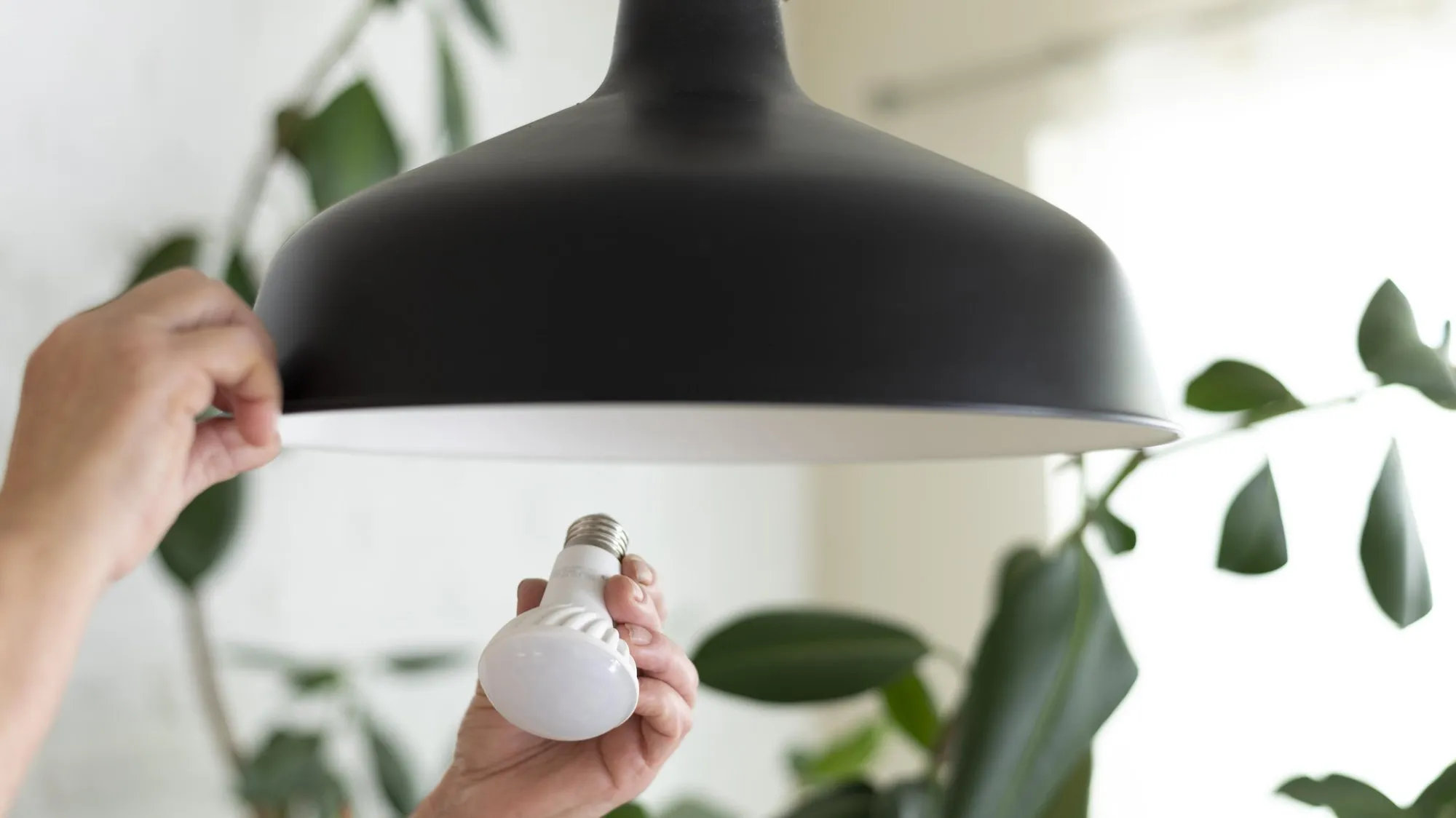
The fastest way to lower your electric bill is to go after the biggest users first: heating, cooling and hot water. Small changes to your thermostat, how you heat water and how you do laundry usually save more than unplugging a phone charger. Many of them cost nothing and work in a rental.
This guide covers the changes the U.S. Department of Energy (DOE) and the EPA’s ENERGY STAR program put numbers on, plus where to get help if the bill is still too high.
Key takeaways
- Heating and cooling are the biggest piece. ENERGY STAR says almost half of the average household’s annual energy bill goes to heating and cooling.
- Turning your thermostat back 7 to 10°F for 8 hours a day can save as much as 10% a year on heating and cooling, according to the DOE.
- Water heating is usually the second-largest energy cost. Setting the water heater to 120°F and washing clothes in cold water both help.
- Electronics that are “off” still draw power. The DOE says this can add 5% to 10% to your monthly utility bill.
- Help exists for lower-income households, including free weatherization through the DOE and bill help through the federal LIHEAP program.
What electricity costs right now
The U.S. Energy Information Administration (EIA) tracks what households pay. In May 2026, the average U.S. residential price was 18.44 cents per kilowatt-hour (kWh), up from 17.37 cents in May 2025, according to EIA’s Electric Power Monthly released in July 2026. The average for all of 2025 was 17.30 cents.
In 2024, the latest year of EIA’s annual bill data, the average residential customer used 863 kWh a month and paid an average bill of $142.26 a month. Prices vary widely by state. In May 2026, the average residential price was about 14 cents per kWh in Iowa and Missouri and around 30 cents in New York.
At 18.44 cents, every 100 kWh you avoid saves about $18. That’s why the changes below focus on the appliances that use the most.
Start by reading your bill
Before you change anything, look at your last few bills and compare the kWh used, not just the dollar amount. A higher bill can come from a rate increase, a longer billing period or more days of hot or cold weather, not just more use.
If your utility has an online account, look for daily or hourly usage. A spike on hot afternoons points to air conditioning. Use that stays high all year points to things that run constantly, such as an old refrigerator, a water heater or electronics left on standby.
Also check what runs on electricity in your home. If your heat or water heater runs on natural gas, changes to those will show up on your gas bill instead.
Heating and cooling
ENERGY STAR says almost half of the average household’s annual energy bill goes to heating and cooling, more than $900 a year. The DOE says the heating system alone typically makes up about 30% of a utility bill.
Set the thermostat back
The DOE says you can save as much as 10% a year on heating and cooling by turning your thermostat back 7 to 10°F for 8 hours a day from its normal setting. Turn it down in fall and winter, and up in spring and summer. Doing it while you sleep or are at work makes the change easy to live with.
If you have a heat pump, the DOE advises against setbacks unless you have a smart or programmable thermostat designed for heat pumps.
A programmable or smart thermostat does this automatically. ENERGY STAR says a certified smart thermostat can cut heating and cooling bills by more than 8%, about $50 a year on average, and about $100 a year if your home is empty much of the day. In a rental, ask your landlord before replacing a thermostat.
Use fans and curtains
- Ceiling fans. The DOE says a ceiling fan lets you turn the thermostat up about 4°F in summer without feeling less comfortable. Fans cool you with a wind-chill effect rather than cooling the room, so the DOE suggests turning them off when you leave.
- Curtains and shades. ENERGY STAR suggests closing shades and drapes in warm weather to keep out the sun’s heat, and opening them during the day in cold weather to let it in. The DOE adds that closing curtains at night helps block cold drafts.
- Clear vents. Keep furniture and rugs off air registers so air can move freely.
Seal air leaks
The DOE says air leaks are among the greatest sources of energy loss in a home. Caulking, sealing and weatherstripping seams, cracks and openings to the outside can save 10% to 20% on heating and cooling bills. Renters can often use removable weatherstripping or door draft stoppers; ask your landlord about anything permanent.
If you have a window air conditioner, ENERGY STAR suggests making sure it fits tightly, and covering it or removing it in winter so heated air doesn’t escape.
Hot water
The DOE says water heating accounts for nearly 20% of the average home’s energy use and is typically the second-largest energy expense after heating and cooling.
- Turn it down to 120°F. The DOE calls this temperature safe for most people. It says you can generally use 120°F if your dishwasher has its own heating element that boosts water temperature; check your dishwasher’s manual.
- Insulate an older tank. If your tank is warm to the touch, the DOE says insulating it could save 7% to 16% a year on water heating. Follow the manufacturer’s instructions, and ask your landlord first in a rental.
- Take showers instead of baths. ENERGY STAR says a 10-minute shower with a 2.5-gallon-per-minute showerhead uses about 25 gallons, less than a typical bath.
- Fix leaky faucets. The DOE says one drip per second wastes 1,661 gallons of water a year.
Laundry and kitchen
Washer and dryer
ENERGY STAR says heating water accounts for about 90% of the energy a washing machine uses. The DOE says switching from hot to warm water can cut a load’s energy use in half, and cold water saves even more. Many loads come clean in cold water, especially with a cold-water detergent.
For the dryer:
- Clean the lint trap before every load. ENERGY STAR says that alone can save up to $34 a year.
- Use the moisture sensor if your dryer has one, so it shuts off when clothes are dry. ENERGY STAR says running an extra 15 minutes per load can cost up to $34 a year.
- Dry full loads, or hang some items to dry.
Dishwasher and fridge
ENERGY STAR suggests scraping dishes instead of rinsing them, running the dishwasher only when it’s full and using the air-dry setting. The DOE suggests checking that your refrigerator door seals close tightly. Close the door on a piece of paper; if it slides out easily, the seal may need adjusting or replacing.
Lighting and electronics
Switch to LEDs
ENERGY STAR says certified LED bulbs use up to 90% less energy and last 15 times longer than standard bulbs. Replacing the bulbs in your five most-used fixtures with ENERGY STAR certified lights can save about $40 a year. LEDs are easy to swap, even in a rental, and you can take them with you when you move.
Cut standby power
The DOE says many electronics keep drawing power when they’re switched off, which could add 5% to 10% to your monthly utility bill. On the 2024 average bill of $142.26, that’s about $7 to $14 a month.
- Plug the TV, game console and streaming box into a power strip and switch it off when you’re done. ENERGY STAR calls a power strip a central “turn off” point.
- An advanced power strip with a timer or activity sensor can do it for you, according to the DOE.
- Unplug chargers when batteries are full or not in use.
- Leave plugged in anything that needs constant power, such as a router, a medical device or a fridge.
Help with bills and upgrades
If your bill is still hard to manage, there are programs that can help.
- Ask your utility. Many utilities offer budget billing, which spreads costs evenly across the year, and payment plans for past-due balances. Terms vary, so ask what’s available before you fall behind.
- Weatherization Assistance Program (WAP). This DOE program, run through state and local agencies, makes free energy-efficiency improvements for lower-income households. Under DOE guidelines, households at or below 200% of the federal poverty guidelines, or that receive Supplemental Security Income (SSI), are eligible; some states use LIHEAP’s limit of 60% of state median income. Homeowners and renters can both apply, though a renter’s landlord must give permission. Priority goes to older adults, people with disabilities, families with children and households with high energy costs. The DOE says eligible households save on average $372 or more a year. Expect a waitlist.
- LIHEAP. The Low Income Home Energy Assistance Program, run by the Department of Health and Human Services through state and local agencies, helps lower-income households with heating and cooling bills, energy crises and some weatherization and energy-related repairs. Your state sets its own income limits and application periods.
- Home energy assessment. The DOE says an assessment can show where your home loses the most energy. Some utilities offer them free or at a discount; ask yours.
Every dollar you trim from the electric bill is a dollar you can put toward savings. If you’re looking for a simple way to start, our guide to the 52-week savings challenge shows how small weekly amounts add up.
Frequently asked questions
What uses the most electricity in a home?
Heating and cooling usually use the most energy. ENERGY STAR says they make up almost half of the average household’s annual energy bill. Water heating is typically second, at nearly 20% of home energy use, according to the DOE. If your heat or water heater runs on gas, that share shows up on your gas bill instead.
What temperature should I set my thermostat to save money?
There’s no single right number. The DOE says turning the thermostat back 7 to 10°F from its normal setting for 8 hours a day, such as while you sleep or are at work, can save as much as 10% a year on heating and cooling. Turn it down in winter and up in summer.
Does unplugging things really save money?
It helps, but less than changing how you heat and cool. The DOE says electronics that draw power while switched off could add 5% to 10% to your monthly bill. A power strip you switch off makes it easy.
Why did my electric bill go up when I didn’t use more power?
Check the kWh on your bill. If your use didn’t change, the increase may come from a higher rate or a longer billing period. EIA data shows the average U.S. residential price rose from 17.37 cents per kWh in May 2025 to 18.44 cents in May 2026.
How can I lower my electric bill in an apartment?
Use thermostat setbacks, ceiling fans and curtains, switch to LED bulbs, wash clothes in cold water, clean the dryer lint trap and use power strips. Removable weatherstripping and draft stoppers help too. Ask your landlord before changing the thermostat or water heater, or making permanent changes.
Can I get help paying my electric bill?
Ask your utility about budget billing or a payment plan. Lower-income households may qualify for LIHEAP bill assistance and for free weatherization through the DOE’s Weatherization Assistance Program. Both are run by state and local agencies, which set application rules.